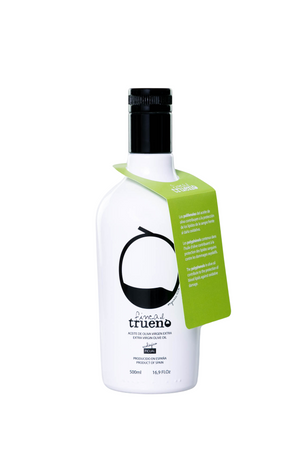
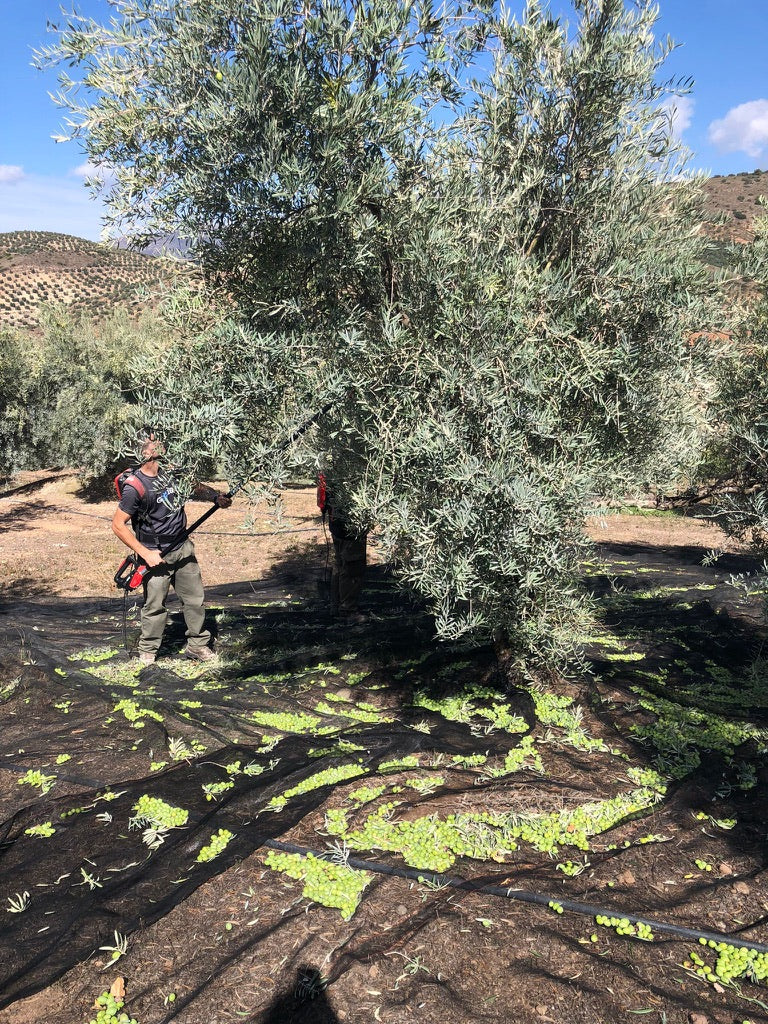
Under EU rules, the benchmark for a high-polyphenol olive oil is 250 mg/kg of hydroxytyrosol and its derivatives. But a number on its own means nothing if you don't know how it was measured. Here is how to read a lab analysis, using our own reports: the 2026/2027 harvest shows 417 mg/kg; the previous year's, 632 mg/kg. These two figures cannot be compared: they come from two different methods.
Three things to check in an analysis
- The method. Chromatography (HPLC) using the official method of the International Olive Council (COI/T.20/Doc. 29), or the Folin-Ciocalteu colour method. They do not measure the same thing.
- The unit, and what the result is expressed as. "mg/kg expressed as tyrosol" or "as caffeic acid": each method converts the result to a different reference substance.
- The sample. The laboratory, the date, the batch. Polyphenols decline over time: an analysis is valid for one batch and one harvest.
Folin or HPLC: why our oil showed 632 one year and 417 the next
The Folin-Ciocalteu method is a colour reaction: it measures everything that reacts with the reagent in one go, and the result is expressed as caffeic acid. It is quick and cheap, but it cannot tell one compound from another.
Liquid chromatography (HPLC), using the official IOC method, separates the compounds one by one and quantifies them; the result is expressed as tyrosol. It is the reference method for olive oil.
| Harvest | Method | Result | Expressed as |
|---|---|---|---|
| 2025/2026 | Folin-Ciocalteu | 632 mg/kg | caffeic acid |
| 2026/2027 | HPLC (COI/T.20/Doc. 29) | 417 mg/kg | tyrosol |
So you cannot say the oil dropped from 632 to 417, or the reverse. To compare two oils, or two harvests, you need the same method. From this harvest on, our reference analysis is HPLC.
The 250 mg/kg threshold: what the law says
There is only one authorised health claim for olive oil polyphenols, in Regulation (EU) 432/2012:
"Olive oil polyphenols contribute to the protection of blood lipids from oxidative stress."
It may only be used for olive oil containing at least 5 mg of hydroxytyrosol and its derivatives (e.g. oleuropein complex and tyrosol) per 20 g of olive oil, i.e. 250 mg/kg. And consumers must be told that the beneficial effect is obtained with a daily intake of 20 g of olive oil.
When a label says "high in polyphenols", the honest thing is to give the figure, the method and the laboratory. If it only gives the adjective, ask for the analysis.
Oleocanthal and oleacein: the names you will see in an HPLC report
HPLC gives more than a total. Here is the breakdown from our 2026/2027 report:
| Compound | Result (mg/kg, as tyrosol) | What it is |
|---|---|---|
| Total biophenols | 416.8 | All the phenolic compounds measured |
| Oleacein | 82.8 | A hydroxytyrosol derivative |
| Oleocanthal | 68.3 | A tyrosol derivative, responsible for the peppery sting in the throat |
| Free tyrosol | 1.7 | Simple form, scarce in a fresh oil |
| Free hydroxytyrosol | 1.1 | Simple form, scarce in a fresh oil |
"Free" hydroxytyrosol and tyrosol are almost absent: in a fresh oil, most of them are bound in more complex forms such as oleacein and oleocanthal. The compounds listed do not add up to the total: the rest is other biophenols that the report does not break down.
Note: the authorised claim covers hydroxytyrosol and its derivatives as a whole. No EU rule allows specific health effects to be attributed to oleocanthal or oleacein on their own.
What raises or lowers polyphenols
- Variety. Picual is one of the varieties richest in polyphenols.
- Harvest timing. Green olives picked early give more polyphenols (and more bitterness and pepperiness) than ripe ones.
- Time to the mill. Our olives are pressed within 6 hours.
- Storage. Light and heat degrade oil: keep the bottle closed, in a cupboard.
- Time. Polyphenols decline gradually after bottling. An analysis is valid for its batch and its date.
Five questions before trusting a figure
- Which laboratory did the analysis?
- Which method: HPLC (COI/T.20/Doc. 29) or Folin?
- What is the result expressed as: tyrosol, caffeic acid…?
- Which harvest and which batch?
- Can I read the full report?
Our analysis, in full
Early harvest 2026/2027, batch INOX_GREEN03. Report no. 61028210603, Laboratorio Tello, Jaén, 28/10/2026. Total biophenols: 416.8 mg/kg expressed as tyrosol, by HPLC using method COI/T.20/Doc. 29.
Download the full report (PDF) · Discover our early harvest olive oil · All about polyphenols
Frequently asked questions
How many polyphenols does an oil need to be "high in polyphenols"?
The phrase has no legal definition of its own. The benchmark used is the threshold of the EU health claim: 250 mg/kg of hydroxytyrosol and derivatives, i.e. 5 mg per 20 g of oil.
Are more polyphenols always better?
More polyphenols mainly means more bitterness and more pepperiness. Above the 250 mg/kg threshold, it is a matter of taste and use.
Does cooking destroy polyphenols?
Heat breaks down part of them, along with the aromas. To get the most out of them, use the oil raw.
Why do some brands claim 800 or 1,000 mg/kg?
Variety, a very early harvest and the analysis method all play a part. Before comparing, check that both figures come from the same method and are expressed in the same unit.